
Versatility of Flexible Diamond Abrasives in Industry

The utilization of flexible diamond abrasives has become increasingly pivotal in numerous industrial sectors due to their exceptional adaptability, precision, and efficiency in processing a wide array of hard and brittle materials. These abrasives, characterized by their unique combination of diamond grit embedded in flexible substrates, offer unparalleled performance in grinding, polishing, cutting, and surface finishing applications. Their capacity to conform to complex geometries and maintain consistent abrasive action under varying operational conditions distinguishes them from traditional rigid abrasive tools. This article explores the multifaceted applications, technical advantages, and practical considerations associated with flexible diamond abrasives, providing a comprehensive understanding of their role in modern industrial processes.
Technical Characteristics and Material Compatibility of Flexible Diamond Abrasives
Flexible diamond abrasives are engineered with a matrix that integrates synthetic or natural diamond particles into a pliable backing material such as resin, rubber, or polymer composites. This construction allows the abrasive to adapt to irregular surfaces and contours, ensuring uniform contact and pressure distribution during operation. The diamond grit size, concentration, and bonding method are meticulously selected to optimize cutting efficiency, surface finish quality, and tool longevity.
Industries processing materials such as glass, ceramics, sapphire, quartz, stone, and carbide benefit significantly from these abrasives. For instance, in the semiconductor and optics sectors, the ability of flexible diamond abrasives to achieve minimal surface defects and precise material removal rates is critical for wafer and lens fabrication. Similarly, in aerospace and automotive manufacturing, where high-strength alloys and composites require exacting surface finishes, these abrasives provide the necessary control and consistency.
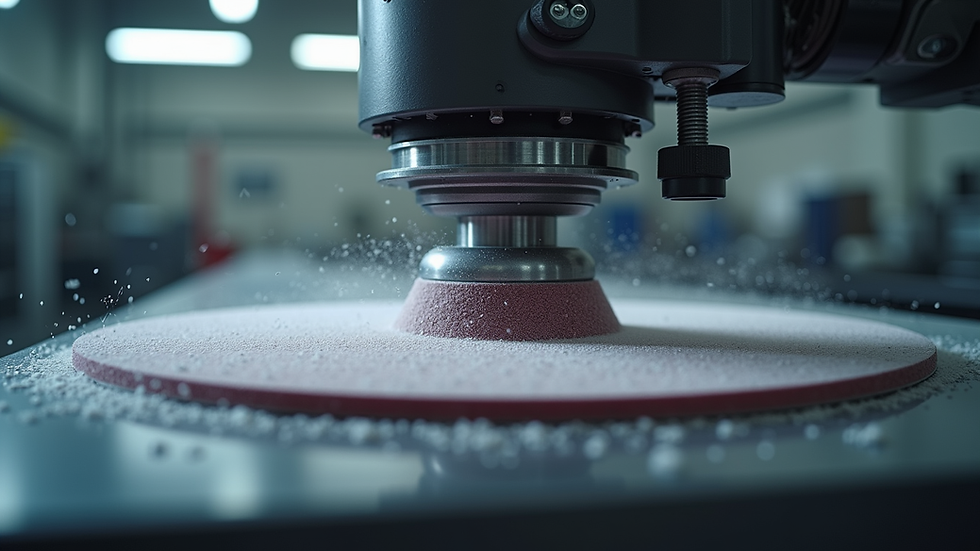
The adaptability of flexible diamond abrasives extends to their compatibility with various grinding and polishing equipment, including hand-held tools, automated polishing machines, and CNC grinding centers. This versatility facilitates their integration into diverse production lines, enhancing operational efficiency and product quality.

Applications and Performance Benefits of Flexible Diamond Abrasives
The deployment of flexible diamond abrasives across multiple industrial applications underscores their versatility and performance advantages. In precision grinding and polishing workshops, these abrasives enable the achievement of superior surface finishes with minimal subsurface damage, which is essential for components requiring tight dimensional tolerances and optical clarity. Their flexibility allows for effective polishing of curved or irregular surfaces, which would be challenging with rigid abrasives.
In the stone, jewelry, and lapidary sectors, flexible diamond abrasives facilitate intricate shaping, cutting, and polishing of gemstones and decorative stones. The abrasives’ ability to conform to complex shapes ensures consistent material removal and reduces the risk of chipping or cracking delicate materials. This precision is vital for maintaining the aesthetic and structural integrity of high-value stones.
Moreover, research laboratories and universities engaged in materials science and prototype fabrication utilize flexible diamond abrasives for experimental surface finishing and microfabrication tasks. The abrasives’ customizable grit sizes and bonding materials allow researchers to tailor the abrasive action to specific material properties and experimental requirements.
The performance benefits of flexible diamond abrasives include:
Enhanced surface finish quality with reduced micro-scratches and defects
Increased tool life due to uniform wear distribution
Improved process control through consistent abrasive action
Reduced operator fatigue owing to the abrasives’ pliability and ease of handling
These advantages contribute to higher productivity, lower operational costs, and improved end-product quality across various industrial domains.
Integration of Flexible Diamond Abrasives in Advanced Manufacturing Processes
The integration of flexible diamond abrasives into advanced manufacturing processes necessitates a thorough understanding of their operational parameters and compatibility with existing equipment. Optimal results are achieved by selecting abrasives with appropriate grit sizes, bonding types, and backing materials tailored to the specific application and material being processed.
For example, in semiconductor wafer fabrication, ultra-fine diamond grits bonded to a flexible substrate are employed to achieve nanometer-scale surface finishes without inducing subsurface damage. Conversely, in automotive component manufacturing, coarser grits may be preferred for rapid material removal during initial grinding stages, followed by finer grits for polishing.
Process parameters such as rotational speed, applied pressure, coolant flow, and feed rate must be carefully controlled to maximize abrasive efficiency and minimize thermal or mechanical damage to the workpiece. The flexibility of these abrasives allows for adaptive pressure distribution, which is particularly beneficial when working with delicate or uneven surfaces.
Furthermore, the modular nature of flexible diamond abrasive products facilitates their use in automated systems, enabling consistent and repeatable surface finishing operations. This integration supports the goals of Industry 4.0 by enhancing process automation, quality control, and traceability.
Practical Recommendations for Selecting and Using Flexible Diamond Abrasives
Selecting the appropriate flexible diamond abrasive requires consideration of several factors to ensure optimal performance and cost-effectiveness. Key criteria include:
Material Hardness and Composition: Harder materials such as sapphire and carbide necessitate abrasives with higher diamond grit concentration and robust bonding to withstand increased wear.
Surface Finish Requirements: The desired surface roughness and finish quality dictate the choice of grit size and abrasive type.
Workpiece Geometry: Complex shapes and contours benefit from abrasives with enhanced flexibility and conformability.
Operational Conditions: Factors such as machine type, speed, pressure, and coolant availability influence abrasive selection.
Cost and Tool Longevity: Balancing initial cost against tool life and performance is essential for economic efficiency.
When employing flexible diamond abrasives, adherence to best practices enhances outcomes:
Utilize appropriate coolant or lubrication to reduce heat generation and prevent abrasive clogging.
Monitor abrasive wear and replace tools proactively to maintain consistent surface quality.
Adjust process parameters based on real-time feedback to optimize material removal rates and finish.
Train operators on handling techniques to maximize abrasive lifespan and safety.
By following these recommendations, industrial professionals can leverage the full potential of flexible diamond abrasives to meet stringent manufacturing standards and evolving material challenges.
Future Trends and Innovations in Flexible Diamond Abrasive Technology
The continuous advancement of material science and manufacturing technologies drives ongoing innovation in flexible diamond abrasive products. Emerging trends focus on enhancing abrasive performance through novel bonding agents, optimized diamond grit distributions, and hybrid composite backings that improve flexibility and durability.
Research into nanodiamond particles and engineered abrasive structures aims to achieve even finer surface finishes and higher precision in microfabrication applications. Additionally, the integration of sensor technologies and smart materials into abrasive tools is anticipated to enable real-time monitoring of wear, temperature, and pressure, facilitating adaptive process control.
Sustainability considerations are also influencing product development, with efforts to reduce environmental impact through recyclable backing materials and eco-friendly manufacturing processes.
As industries continue to demand higher precision, efficiency, and reliability, the role of flexible diamond abrasives will expand, supported by technological innovations that address complex material challenges and production requirements.
The ongoing commitment to research and development by manufacturers such as Flexible Diamond Abrasive Products Tech Co., Ltd ensures that these advanced abrasive solutions remain at the forefront of industrial surface finishing technology, supporting a wide range of applications from semiconductor fabrication to aerospace component manufacturing.
The versatility and technical sophistication of flexible diamond products underscore their indispensable role in modern industrial processes. Their unique combination of flexibility, precision, and durability enables superior performance across diverse applications, making them a critical component in achieving high-quality surface finishes and efficient material processing.


Comments