
Applications of Diamond Grinding Tools in Industry

The utilization of diamond grinding tools has become indispensable across a multitude of industrial sectors due to their unparalleled hardness, precision, and durability. These tools, engineered with synthetic diamond abrasives embedded in various bonding matrices, provide exceptional performance in grinding, cutting, and polishing applications involving extremely hard and brittle materials. The capacity of diamond grinding tools to maintain consistent surface finishes, achieve high material removal rates, and extend tool life under demanding conditions has led to their widespread adoption in industries ranging from semiconductor manufacturing to aerospace component fabrication. This article explores the diverse applications of diamond grinding tools, emphasizing their technical advantages, operational considerations, and practical recommendations for optimizing their use in industrial environments.
Technical Advantages and Material Compatibility of Diamond Grinding Tools
Diamond grinding tools exhibit superior abrasive properties due to the intrinsic hardness of diamond, which ranks highest on the Mohs scale. This characteristic enables these tools to effectively process materials that are otherwise challenging to machine, such as ceramics, sapphire, quartz, carbide, and hardened steels. The abrasive grains are typically embedded in metal, resin, or vitrified bonds, each offering distinct performance attributes tailored to specific grinding requirements.
The selection of an appropriate diamond grinding tool depends on several factors, including the material hardness, thermal conductivity, and the desired surface finish. For instance, metal-bonded diamond wheels are preferred for heavy stock removal and rough grinding of hard materials due to their robustness and heat dissipation capabilities. Conversely, resin-bonded wheels provide finer finishes and are suitable for precision grinding tasks where minimal surface damage is critical.
In addition to material compatibility, the grain size and concentration of diamond abrasives significantly influence the grinding efficiency and surface quality. Coarser grains facilitate rapid material removal but may induce higher surface roughness, whereas finer grains yield smoother finishes at the expense of slower grinding rates. Optimizing these parameters is essential to balance productivity and quality in industrial applications.
Industrial Applications of Diamond Grinding Tools
The versatility of diamond grinding tools is demonstrated by their extensive use in various industrial sectors, each with unique processing demands and material challenges.
Semiconductor and Electronics Manufacturing
In semiconductor fabrication, diamond grinding tools are employed for wafer thinning, edge grinding, and surface planarization. The precision required in these processes necessitates tools that can deliver consistent material removal with minimal subsurface damage. Diamond grinding tools enable the production of ultra-flat, defect-free wafers essential for high-performance electronic devices. Additionally, these tools facilitate the shaping and polishing of optical components such as lenses and substrates, where surface integrity directly impacts device functionality.
Advanced Materials and Aerospace Components
The aerospace and advanced materials industries frequently utilize diamond grinding tools to machine high-strength alloys, composites, and ceramics used in critical components. The ability of these tools to maintain dimensional accuracy and surface finish under high mechanical and thermal loads is vital for ensuring component reliability and performance. For example, turbine blades and engine parts undergo precision grinding with diamond tools to achieve tight tolerances and fatigue-resistant surfaces.
Precision Grinding and Polishing Workshops
Workshops specializing in precision grinding and polishing rely heavily on diamond grinding tools to meet stringent surface finish requirements. These facilities process a wide range of materials, including hard metals and brittle ceramics, where conventional abrasives fail to deliver consistent results. The adaptability of diamond grinding tools to various bonding systems and abrasive grades allows these workshops to customize solutions for specific applications, enhancing productivity and quality control.
Stone, Jewelry, and Lapidary Applications
In the stone and jewelry sectors, diamond grinding tools are indispensable for shaping, cutting, and polishing gemstones and decorative stones. The tools’ ability to produce intricate shapes and high-gloss finishes without inducing cracks or fractures is critical for maintaining the aesthetic and structural integrity of valuable materials. Lapidary professionals benefit from the flexibility and precision offered by diamond grinding tools, enabling the creation of complex designs and fine details.
Operational Considerations and Best Practices for Using Diamond Grinding Tools
Maximizing the performance and lifespan of diamond grinding tools requires adherence to specific operational protocols and maintenance practices. Understanding the interaction between the tool, workpiece, and grinding parameters is essential for achieving optimal results.
Tool Selection and Setup
Selecting the correct diamond grinding tool involves evaluating the workpiece material, desired surface finish, and production volume. It is advisable to consult technical datasheets and collaborate with tool manufacturers to identify the most suitable bond type, grain size, and concentration. Proper mounting and alignment of the grinding wheel are critical to prevent vibrations and uneven wear, which can compromise surface quality and tool longevity.
Grinding Parameters and Cooling
Controlling grinding parameters such as wheel speed, feed rate, and depth of cut is fundamental to maintaining process stability. Excessive speeds or feed rates can generate heat buildup, leading to thermal damage of both the tool and workpiece. The application of appropriate coolant or lubrication systems mitigates thermal effects, reduces friction, and facilitates chip removal. Water-based coolants are commonly used, but in some cases, oil-based or synthetic fluids may be preferred depending on material compatibility.
Dressing and Truing Procedures
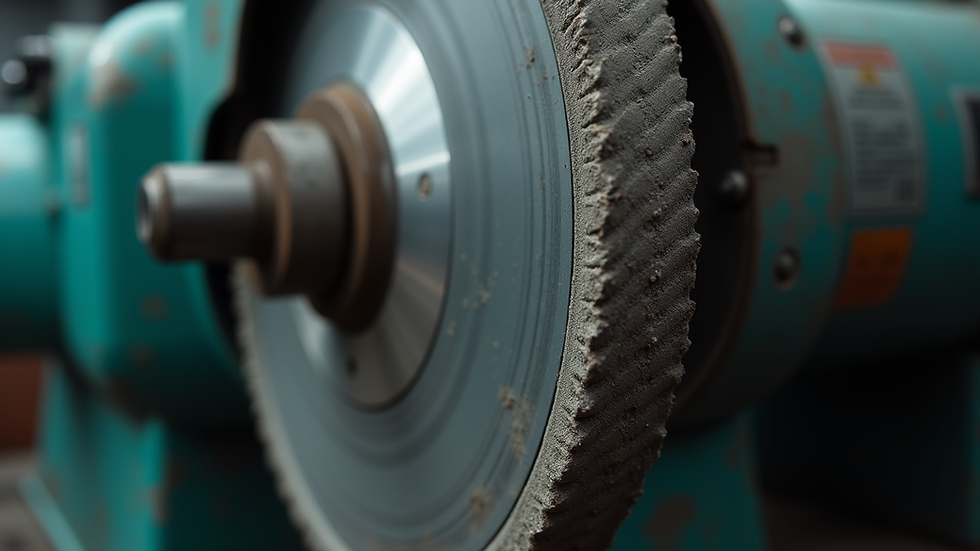
Regular dressing and truing of diamond grinding tools are necessary to restore the wheel’s cutting ability and maintain geometric accuracy. Dressing removes clogged abrasive grains and exposes fresh diamonds, while truing corrects wheel runout and shape deviations. Employing diamond dressing sticks or rotary dressers ensures consistent wheel performance and prolongs service life.
Safety and Environmental Considerations
Given the high rotational speeds and abrasive nature of diamond grinding tools, strict adherence to safety protocols is mandatory. Operators should utilize appropriate personal protective equipment and ensure that grinding machines are equipped with guards and dust extraction systems. Proper disposal of used grinding fluids and abrasive debris is also essential to minimize environmental impact.

Innovations and Future Trends in Diamond Grinding Tools Technology
The continuous evolution of diamond grinding tools is driven by advancements in materials science, manufacturing techniques, and application requirements. Emerging technologies aim to enhance tool performance, reduce operational costs, and expand the range of processable materials.
Synthetic Diamond Development
Recent progress in synthetic diamond production, including chemical vapor deposition (CVD) and high-pressure high-temperature (HPHT) methods, has enabled the fabrication of diamonds with tailored properties such as enhanced toughness and thermal stability. These developments contribute to the creation of grinding tools with superior wear resistance and cutting efficiency.
Hybrid Bonding Systems
Innovations in bonding technologies have led to hybrid systems that combine the advantages of metal, resin, and vitrified bonds. These hybrid bonds offer improved flexibility, heat dissipation, and abrasive retention, allowing diamond grinding tools to perform effectively under diverse grinding conditions.
Automation and Process Integration
The integration of diamond grinding tools into automated grinding systems and smart manufacturing environments facilitates real-time process monitoring and adaptive control. This integration enhances precision, reduces human error, and optimizes tool usage, thereby increasing overall productivity.
Environmental Sustainability
Efforts to develop eco-friendly diamond grinding tools focus on reducing hazardous materials in bonds and abrasives, improving coolant recycling, and minimizing energy consumption during grinding operations. Sustainable practices are becoming increasingly important in meeting regulatory requirements and corporate social responsibility goals.
Enhancing Industrial Efficiency with Advanced Diamond Abrasive Solutions
The strategic implementation of advanced diamond abrasive solutions significantly contributes to improving industrial efficiency, product quality, and operational reliability. By leveraging the unique properties of diamond grinding tools, manufacturers and workshops can achieve precise material removal, consistent surface finishes, and extended tool life, even when processing the most challenging materials.
To maximize the benefits of these tools, it is recommended to:
Conduct thorough material and process assessments to select the optimal diamond grinding tool configuration.
Implement rigorous maintenance schedules, including regular dressing and truing.
Utilize appropriate cooling and lubrication systems tailored to specific grinding applications.
Invest in operator training to ensure adherence to best practices and safety standards.
Stay informed about technological advancements and incorporate innovative tools and methods as they become available.
The continuous pursuit of excellence in diamond abrasive technology supports the evolving demands of modern industry, enabling the production of high-precision components and surfaces that meet stringent quality and performance criteria. For those seeking reliable and efficient grinding solutions, exploring the capabilities of diamond grinding wheels represents a critical step toward achieving superior manufacturing outcomes.


Comments