
Versatile Uses of Flexible Diamond Products: Exploring Flexible Diamond Uses in Industry and Research

The application of advanced abrasive materials has evolved significantly with the introduction of flexible diamond products, which have become indispensable in numerous industrial and research settings. These products, characterized by their adaptability, precision, and durability, have transformed the methodologies employed in grinding, polishing, cutting, and surface finishing of hard and brittle materials. The versatility of these tools is evident in their capacity to conform to complex geometries and deliver consistent results across a wide range of substrates, including glass, ceramics, sapphire, quartz, stone, and carbide. This article aims to provide a comprehensive examination of the diverse flexible diamond uses, highlighting their technical advantages, practical applications, and the impact on various sectors requiring high-precision abrasive solutions.
Technical Advantages and Material Compatibility in Flexible Diamond Uses
The primary technical advantage of flexible diamond products lies in their unique construction, which integrates diamond abrasive particles within a pliable matrix. This design facilitates superior conformity to irregular surfaces, enabling uniform material removal and minimizing the risk of surface damage. The flexibility inherent in these products allows for enhanced control during the grinding and polishing processes, which is particularly critical when working with delicate or complex components.
Materials such as sapphire and quartz, known for their exceptional hardness and brittleness, benefit significantly from the controlled abrasion provided by flexible diamond tools. The ability to maintain consistent pressure and adapt to surface contours reduces micro-cracking and subsurface damage, which are common challenges in traditional abrasive methods. Furthermore, the high thermal conductivity of diamond particles aids in dissipating heat generated during processing, thereby preserving the integrity of heat-sensitive materials.
Industries engaged in semiconductor wafer fabrication, optics manufacturing, and electronics component production rely heavily on these technical attributes. The precision and repeatability offered by flexible diamond products ensure that surface finishes meet stringent specifications, which is essential for the performance and reliability of the final products.

Application in Precision Grinding and Polishing Workshops
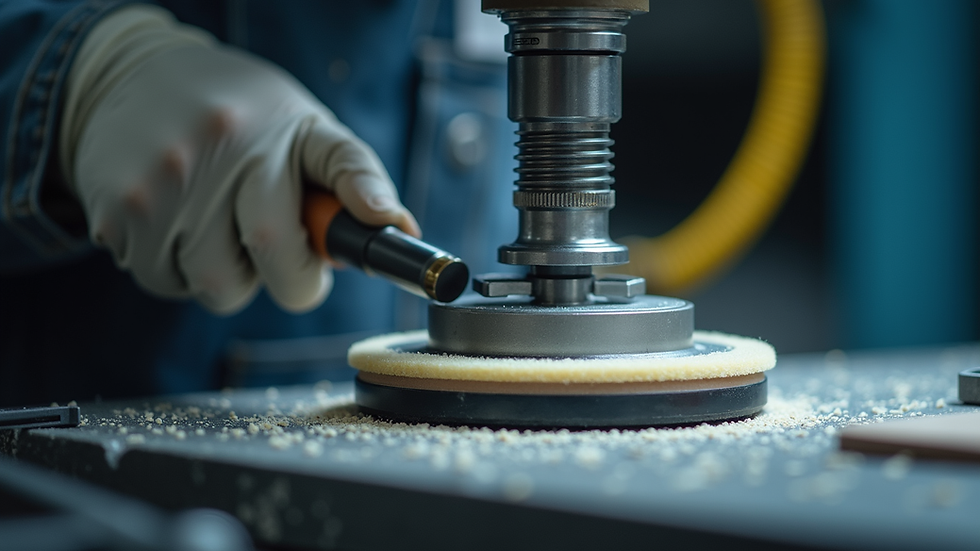
In precision grinding and polishing workshops, the demand for tools that deliver consistent surface finishes with minimal defects is paramount. Flexible diamond products excel in this environment due to their ability to provide controlled abrasion and uniform material removal rates. These tools are employed extensively for finishing operations on hard materials where surface quality directly influences product performance.
The adaptability of flexible diamond abrasives allows for their use on a variety of substrates, including carbide cutting tools, ceramic components, and optical lenses. For example, in the finishing of carbide tools, the flexible diamond abrasives enable the removal of micro-burrs and surface irregularities without compromising the tool geometry. This results in enhanced cutting performance and extended tool life.
Moreover, the polishing of optical components such as lenses and substrates benefits from the fine abrasive action and conformability of these products. The ability to achieve mirror-like finishes with minimal subsurface damage is critical in optics manufacturing, where surface imperfections can degrade optical performance.
Workshops can optimize their processes by selecting flexible diamond products with specific grit sizes and bonding materials tailored to the application requirements. This customization ensures that the abrasive action is appropriate for the material hardness and desired surface finish, thereby improving efficiency and reducing rework.
Integration in Semiconductor, Optics, and Electronics Industries
The semiconductor, optics, and electronics industries demand abrasive solutions that combine precision, reliability, and minimal contamination risk. Flexible diamond products meet these criteria by offering high-performance abrasive action within a controlled and adaptable format. Their use in wafer thinning, lens shaping, and substrate polishing is well-documented and continues to expand as material technologies advance.
In semiconductor wafer processing, the ability to achieve ultra-flat surfaces with minimal subsurface damage is essential for device performance. Flexible diamond abrasives facilitate this by conforming to wafer topography and providing uniform abrasion, which reduces the likelihood of defects that can affect electrical characteristics.
Optics manufacturers utilize these products to produce lenses and prisms with precise curvature and surface quality. The flexibility of the abrasive tools allows for the accommodation of complex shapes and freeform surfaces, which are increasingly prevalent in modern optical designs.
Electronics component fabrication, including the polishing of substrates and connectors, benefits from the controlled abrasive action and reduced particle contamination associated with flexible diamond products. This contributes to higher yields and improved device reliability.
Advanced Materials and Aerospace Applications of Flexible Diamond Uses
The aerospace and advanced materials sectors frequently encounter challenges related to the machining and finishing of high-strength, specialty materials such as titanium alloys, composites, and ceramics. Flexible diamond products provide a solution by enabling precise surface finishing that enhances material performance and longevity.
In aerospace component manufacturing, surface integrity is critical to ensure fatigue resistance and aerodynamic efficiency. Flexible diamond abrasives allow for the removal of surface defects and the achievement of tight dimensional tolerances without inducing thermal or mechanical damage. This is particularly important for turbine blades, engine components, and structural parts fabricated from advanced alloys and composites.
The automotive industry also benefits from these abrasive tools in the finishing of engine components, transmission parts, and wear-resistant surfaces. The ability to polish complex geometries and achieve consistent surface finishes contributes to improved mechanical performance and reduced maintenance requirements.
Research and development teams working with novel materials utilize flexible diamond products to prototype and refine surface finishing processes. The adaptability and precision of these tools support experimental workflows and facilitate the exploration of new material properties and applications.
Recommendations for Optimizing Flexible Diamond Product Utilization
To maximize the benefits of flexible diamond products, it is essential to consider several factors related to tool selection, process parameters, and maintenance. The following recommendations provide practical guidance for industrial and research applications:
Select Appropriate Grit Size and Bonding Material: Match the abrasive grit size and bonding matrix to the material hardness and desired surface finish. Coarser grits are suitable for rapid material removal, while finer grits achieve superior surface quality.
Control Process Parameters: Optimize pressure, speed, and cooling to prevent overheating and minimize surface damage. Flexible diamond products perform best under controlled conditions that balance material removal rate and surface integrity.
Regular Inspection and Replacement: Monitor tool wear and replace abrasives before performance degradation affects product quality. Consistent tool condition ensures repeatability and reduces downtime.
Implement Proper Cleaning Protocols: Maintain cleanliness to avoid contamination and preserve abrasive effectiveness. This is particularly important in semiconductor and optics applications.
Leverage Technical Support: Engage with manufacturers and suppliers for technical guidance and customization options. Expert advice can enhance process efficiency and product outcomes.
By adhering to these recommendations, users can fully exploit the capabilities of flexible diamond products, achieving superior results across a broad spectrum of applications.
Future Trends and Innovations in Flexible Diamond Uses
The ongoing development of flexible diamond abrasive technologies is poised to address emerging challenges in material processing and surface finishing. Innovations focus on enhancing abrasive performance, extending tool life, and expanding application versatility.
Advancements in bonding materials and diamond particle engineering are expected to improve the flexibility and durability of abrasive tools, enabling their use on increasingly complex and delicate substrates. Integration with automated and robotic systems will facilitate precision and repeatability in high-volume manufacturing environments.
Sustainability considerations are also driving research into eco-friendly manufacturing processes and recyclable abrasive products. These developments aim to reduce environmental impact while maintaining or improving abrasive efficiency.
The continuous evolution of flexible diamond products will support the demands of cutting-edge industries, including quantum computing, advanced optics, and next-generation aerospace materials, ensuring that these tools remain at the forefront of precision surface finishing technology.
In summary, the diverse and adaptable nature of flexible diamond products has established them as essential tools across multiple high-precision industries. Their ability to conform to complex surfaces, deliver consistent abrasive action, and preserve material integrity makes them invaluable for manufacturers, researchers, and professionals engaged in the processing of hard and brittle materials. By understanding the technical advantages, application contexts, and optimization strategies, users can harness the full potential of these advanced abrasive solutions to meet evolving technological challenges and achieve superior surface finishes.


Comments