
Precision with Diamond Wheels Benefits

In the realm of advanced manufacturing and materials processing, the pursuit of precision and efficiency remains paramount. The utilization of diamond wheels benefits is a critical factor in achieving superior surface finishes, enhanced material removal rates, and consistent dimensional accuracy across a wide range of applications. The integration of these tools into industrial workflows has revolutionized the capabilities of manufacturers and researchers alike, enabling the processing of extremely hard and brittle materials with unprecedented control and reliability. This article explores the technical intricacies, advantages, and practical considerations associated with diamond abrasive tools, emphasizing their indispensable role in modern precision grinding and polishing operations.
Understanding Diamond Wheels Benefits in Industrial Applications
The benefits of diamond wheels extend far beyond their inherent hardness and wear resistance. These tools provide a unique combination of mechanical strength, thermal stability, and chemical inertness, which collectively contribute to their exceptional performance in grinding and finishing processes. The ability to maintain sharp cutting edges under high-stress conditions results in reduced grinding forces, minimized thermal damage to workpieces, and prolonged tool life. This translates into significant cost savings and improved throughput for manufacturers handling materials such as ceramics, sapphire, quartz, carbide, and advanced composites.
Moreover, diamond wheels offer unparalleled versatility in terms of grit size, bond type, and wheel configuration, allowing customization to meet specific application requirements. For instance, vitrified bonds provide rigidity and dimensional stability for high-precision grinding, while resin bonds offer enhanced flexibility and shock absorption for delicate polishing tasks. The adaptability of diamond abrasive tools ensures optimal performance across diverse sectors, including semiconductor wafer fabrication, optics manufacturing, aerospace component finishing, and gemstone shaping.
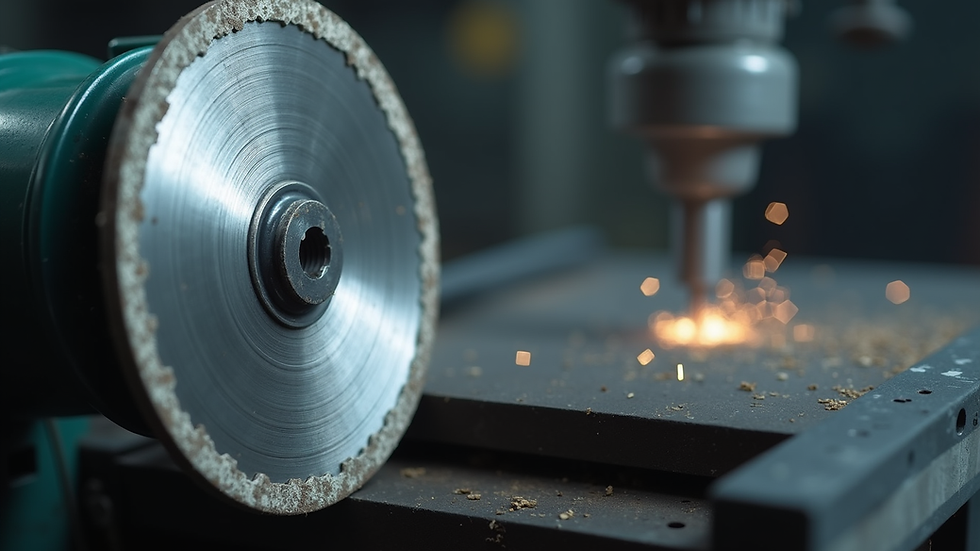
Close-up view of a diamond grinding wheel with vitrified bond
What is the difference between CBN and diamond?
In the context of precision grinding, it is essential to distinguish between cubic boron nitride (CBN) and diamond abrasives, as each material exhibits distinct properties that influence their suitability for specific applications. Diamond, being the hardest known material, excels in grinding non-ferrous and non-metallic materials such as ceramics, glass, and carbides. Its superior hardness and thermal conductivity enable efficient material removal with minimal wheel wear. However, diamond abrasives are chemically reactive with ferrous metals at elevated temperatures, which can lead to rapid degradation of the grinding tool.
Conversely, CBN abrasives are second only to diamond in hardness but demonstrate exceptional chemical stability when grinding ferrous materials such as hardened steels and superalloys. CBN wheels maintain their cutting efficiency and structural integrity under high thermal loads, making them the preferred choice for ferrous metal applications. The selection between diamond and CBN wheels must therefore be guided by the material composition of the workpiece, desired surface finish, and operational parameters to optimize grinding performance and tool longevity.
Technical Considerations for Optimizing Diamond Abrasive Performance
Achieving precision with diamond abrasive tools necessitates a comprehensive understanding of the interplay between wheel specifications, machine parameters, and workpiece characteristics. Key factors influencing grinding outcomes include:
Grit size and concentration: Finer grits yield smoother surface finishes but may reduce material removal rates, while coarser grits enhance cutting efficiency at the expense of surface quality. Optimal grit concentration ensures sufficient abrasive exposure without excessive wheel wear.
Bond type and hardness: The bond must securely hold diamond particles while allowing controlled wear to expose fresh abrasives. Harder bonds are suitable for soft materials requiring high precision, whereas softer bonds accommodate harder materials by facilitating self-sharpening.
Wheel speed and feed rate: Higher wheel speeds improve cutting action but increase thermal load, necessitating effective cooling strategies. Feed rates must balance productivity with surface integrity to prevent defects such as micro-cracking or burn marks.
Coolant application: Proper coolant selection and delivery reduce frictional heat, flush away debris, and extend tool life. Water-based coolants are common, but specialized fluids may be required for sensitive materials.
Implementing these parameters with precision enables the consistent production of components meeting stringent dimensional tolerances and surface finish requirements, critical in sectors such as optics and semiconductor manufacturing.

High angle view of precision grinding machine with diamond wheel mounted
Practical Applications and Industry-Specific Use Cases
The deployment of diamond abrasive tools spans a multitude of industries, each with unique demands for precision and reliability. In the semiconductor industry, diamond wheels facilitate the planarization and edge profiling of silicon wafers, ensuring defect-free surfaces essential for device performance. Optics manufacturers rely on diamond grinding to shape and polish lenses and substrates with nanometer-level surface roughness, critical for optical clarity and functionality.
In aerospace and automotive sectors, diamond abrasive tools enable the machining of high-strength alloys and composite materials, contributing to lightweight, high-performance components. Research laboratories utilize these tools for prototype fabrication and experimental surface treatments, benefiting from the adaptability and precision offered by diamond abrasives.
Furthermore, the stone, jewelry, and lapidary industries exploit the flexibility and cutting power of diamond wheels to shape and polish gemstones and decorative stones, achieving intricate designs and flawless finishes. Distributors and industrial supply partners play a vital role in ensuring the availability of high-quality diamond abrasive products, supported by technical expertise to assist end-users in selecting the appropriate tools for their applications.
Future Trends and Innovations in Diamond Abrasive Technology
The continuous evolution of material science and manufacturing technologies drives ongoing innovation in diamond abrasive solutions. Emerging trends include the development of engineered diamond composites with enhanced toughness and thermal conductivity, enabling higher grinding speeds and improved tool durability. Advances in bonding technologies aim to optimize abrasive retention and self-sharpening capabilities, reducing downtime and maintenance costs.
Integration of smart sensors and monitoring systems within grinding equipment facilitates real-time process control, allowing adaptive adjustments to maintain optimal grinding conditions and prevent tool or workpiece damage. Additionally, environmentally sustainable manufacturing practices are influencing the design of diamond abrasive products, with a focus on reducing waste and energy consumption.
As industries confront increasingly complex materials and tighter tolerances, the role of precision diamond abrasive tools will become even more critical. Continued collaboration between manufacturers, researchers, and end-users will drive the development of next-generation diamond grinding wheels that meet the evolving challenges of modern production environments.
Enhancing Operational Efficiency with Diamond Abrasive Solutions
The strategic implementation of diamond abrasive tools within manufacturing and research workflows yields substantial improvements in operational efficiency and product quality. By selecting the appropriate diamond wheel specifications and optimizing grinding parameters, it is possible to achieve:
Reduced cycle times through higher material removal rates without compromising surface integrity.
Extended tool life, minimizing downtime and replacement costs.
Consistent surface finishes that meet or exceed industry standards.
Lower thermal and mechanical stresses on workpieces, preserving material properties.
Improved process repeatability, essential for high-volume production and quality assurance.
To maximize these benefits, it is advisable to engage with technical experts and leverage comprehensive testing and validation protocols tailored to specific applications. This approach ensures that diamond abrasive tools deliver their full potential, supporting the production of high-precision components across diverse industrial sectors.
The integration of diamond grinding wheels into precision manufacturing processes represents a cornerstone of modern materials engineering. Their unique combination of hardness, versatility, and reliability empowers industries to meet the stringent demands of contemporary production and research, driving innovation and excellence in surface finishing technologies.


Comments